
Advanced Glaucoma Screening in Cranston: Why Eye Pressure Checks Aren't Enough
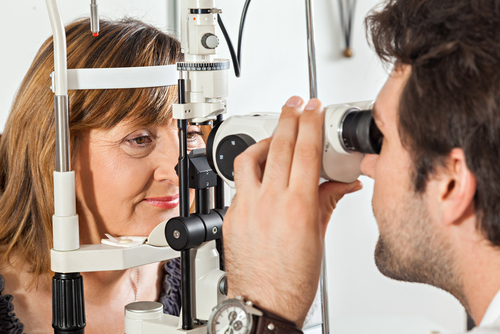
You can read the smallest letters on an eye chart and still have early glaucoma. The most common form develops gradually, and changes in side vision can be easy to miss. At our Cranston office, we look beyond your eye pressure to check the health of your optic nerve, which carries visual information from your eye to your brain.
What Can Eye Pressure Tell Us?
We measure the pressure inside each eye because elevated pressure increases the risk of glaucoma. Some people have higher readings for years without signs of optic nerve damage. Others develop damage even when their readings stay within the usual range. This is called normal-tension glaucoma.
That difference matters during an eye exam. If your pressure is elevated but your optic nerve looks healthy, we may recommend monitoring. If we see a change in the nerve, a normal pressure reading still leaves us with a reason to investigate.
What We Look for During Glaucoma Testing
Glaucoma screening starts with a comprehensive eye exam. Your history and what we see during the exam help us decide which tests will be most useful.
Dilated optic nerve exam. Dilating drops widen your pupils so we can examine the back of each eye. We look closely at the shape of the optic nerve and the tissue around its central hollow for signs of damage.
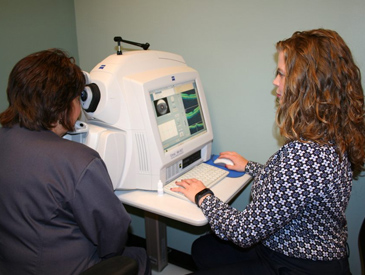
Optical coherence tomography (OCT). This scan uses light to measure the thickness of the nerve fiber layer around the optic nerve. Comparing scans over time helps us identify areas where those fibers are thinning.
Computerized visual field testing. You look straight ahead and press a button when you see small flashes of light. Your responses help us map areas where your vision may be less sensitive, including spots you haven’t noticed in daily life.
Why We May Recommend a Follow-Up
Your first scan and visual field test give us a starting point. For example, if you miss several lights in one area, we may repeat the test to see whether the same pattern appears. We can then check whether that area corresponds to thinning on your OCT scan. Together, those findings help us decide whether to continue monitoring or discuss treatment.
If a parent or sibling has glaucoma, or a previous exam showed elevated eye pressure, let us know when you visit. We’ll use that history and your exam results to recommend when you should return.
To schedule a comprehensive eye exam and discuss your glaucoma risk, call Garden City EyeCare in Cranston, RI, at (401) 943-8151.

Our Services
Contact Info
Hours of Operation
- Monday 8:00am - 5:00pm
- Tuesday 8:00am - 6:00pm
- Wednesday 8:30am - 5:00pm
- Thursday 8:00am - 5:00pm
- Friday 8:00am - 4:00pm
- Saturday 8:00am - 1:00pm
- Sunday Closed
© 2026 Garden City Eye Care. All rights Reserved. Accessibility Statement - Privacy Policy - Sitemap
Powered by:
